By Omnia Abu Alkhair Masoud
As Eid al-Adha approaches, hundreds of families in the Gaza Strip are still searching for loved ones whose whereabouts remain unknown. Amid the devastation of war, the word “missing” has become one of the most painful words families can utter, perhaps second only to “killed,” as it leaves them suspended between hope and despair, with no clear answers about the fate of those they love
For families of the missing, uncertainty can be more unbearable than grief itself. Unlike those who are confirmed dead, the missing leave behind unanswered questions, endless searches and the agonizing possibility that they may still be alive somewhere, waiting to be found
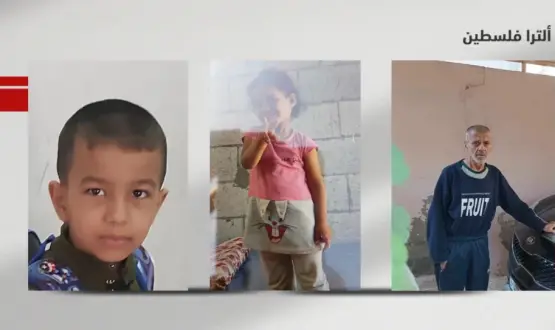
For Maha Kaheil, a doctor from Gaza, the disappearance of her 62-year-old brother Maher turned an ordinary morning into the beginning of a relentless search
One morning, she woke early to prepare breakfast and bring him his medication. Maher, who has disabilities and suffers from several medical conditions requiring regular treatment, was not in the tent where the family had been living after fleeing Rafah for Khan Younis
The family had set up the tent beside a house where its male members were staying. Maher had apparently left while his brother, who was sharing the tent with him, was asleep from exhaustion. He has not been seen since
“I started running around the tent and in every direction, calling his name. I had food in one hand and his medication in the other. He had simply disappeared, and we could not find him,” Maha recalled
Maher had repeatedly asked his sister to take him back to their home in Gaza City’s Al-Daraj neighbourhood. Like a child longing for home, he struggled to understand why they had to remain displaced in Khan Younis
Maha had tried to reassure him, promising that they would return once the bombing stopped. But Maher did not wait for that promise
“He wanted to go back to our home and our neighbourhood,” she said, describing the disappearance as a devastating blow to the family
Maher is not an isolated case. Across Gaza, people have gone missing under circumstances ranging from displacement and fear to bombardment, forced evacuation and the collapse of normal family and community structures
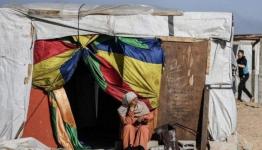
For many displaced families, living in makeshift tents without doors or proper security has made it easier for vulnerable people, particularly children, older people and those with disabilities or mental health conditions, to become separated from their relatives
A search with no clear answers
Maher's family exhausted every available option in their attempt to locate him. They contacted hospitals, police stations and the International Committee of the Red Cross, while circulating information about his disappearance
But the search yielded no results
“We spend the entire day searching among the living and the dead. We ask in every neighbourhood and every house, but so far we have received no information about him,” Maha said
Social media platforms have increasingly become informal missing-person networks, with families sharing photographs, descriptions and contact details in the hope that someone might recognize a relative or provide information about their whereabouts
The most vulnerable among the missing include children, older people and individuals with psychological or cognitive disabilities, whose ability to communicate their identities or find their way home may be limited
Police struggle to trace the missing
A police source told Ultra Palestine that police stations in Gaza continue to receive missing-person reports and circulate information despite severe shortages and the direct targeting of their personnel and facilities
When a family reports someone missing, police collect identifying details, contact information and other relevant information, before issuing an operational alert through police WhatsApp groups, accompanied by the missing person's photograph
However, the source acknowledged that there is no specialized team dedicated to searching for missing people because of the ongoing war and the extremely difficult working conditions
Police officers deal with each report as it arrives and contact families if information emerges indicating that the missing person has been found, whether alive or dead
The identification of bodies recovered from areas affected by Israeli military operations presents another major challenge
According to the source, when unidentified bodies are found in relatively good condition, photographs are taken and circulated on social media to help families identify their relatives. The bodies are kept in hospital morgues for three days before being buried if no one comes forward to identify them
When bodies are decomposed, specialists document available identifying features, clothing, the location where the body was found and any distinguishing marks. This information is recorded under a reference number before burial, allowing relatives to identify the deceased at a later stage through matching descriptions
The source said there is no comprehensive protocol for following up on missing-person cases across different age groups and locations, leaving the police largely responsible for handling the issue
He also explained that the Palestinian Red Crescent Society's ambulance teams do not receive bodies until they have been registered with the police. Their role during bombardments is primarily to retrieve casualties and wounded people from affected areas
Hospitals also follow procedures when unidentified bodies arrive. Medical staff complete special forms and record information provided by those who brought the bodies in, helping facilitate subsequent identification
Despite these efforts, the source stressed that no accurate figures are available for the total number of missing people in Gaza. A definitive count will only be possible after the war, when records can be reviewed and unidentified bodies accounted for
Not every missing person remains missing
While many families continue to search without knowing whether their loved ones are alive, some disappearances have ended in reunions
Three-year-old Alaa Shaheen was playing with other children outside her family's home in the Batn al-Sameen area, south of Khan Younis, when she disappeared
Her father and relatives spent the entire night searching for her, moving between neighbourhoods under bombardment and the constant presence of Israeli surveillance aircraft
Her uncle said the family feared that the child might have been caught in an attack or trapped inside a house that was subsequently bombed
The family reported her disappearance to the police and the International Committee of the Red Cross, searched hospitals across Khan Younis and circulated her photograph and identifying information on social media
After a night and another half-day of searching, the family received a call from a relative who had seen Alaa's photograph online and recognized information about the family that had found her
The child had been found more than four kilometres from her home
“We do not know how she managed to walk that far. The family who found her said she was crying when they came across her, and they took care of her until we were able to collect her,” her uncle said
He described the hours of uncertainty as extremely difficult, adding that the experience had prompted the family to help other households searching for missing relatives
Red Cross: Thousands of cases reported
The International Committee of the Red Cross (ICRC) has also faced mounting criticism over its ability to assist families searching for missing relatives during the war
Speaking to Ultra Palestine, ICRC spokesperson in Gaza Hisham Muhanna said the scale and nature of the violence had placed enormous pressure on humanitarian operations and severely complicated the organization's ability to respond
Eight months after the renewed hostilities between Israel, Hamas and other armed groups in Gaza, the organization had expanded its emergency response and adjusted its operations to address growing humanitarian needs in Israel and the occupied Palestinian territory, he said
Muhanna outlined several activities undertaken by the ICRC to help families trace missing relatives and restore family links
These included facilitating the release and transfer of 154 Palestinian detainees from Israeli places of detention back to their families, as well as receiving 8,470 requests from relatives seeking information about the fate and whereabouts of loved ones
The requests were submitted through existing ICRC channels and additional emergency hotlines operating in Arabic, Hebrew and English
Of those cases, 2,109 had been closed after contact was restored between the individuals concerned and their families
The organization had also contacted 6,973 families out of the families of 8,341 Palestinians reported missing in Gaza, in an effort to collect information that could help establish their whereabouts and determine their fate, according to Muhanna
He added that the ICRC continued to call on the relevant Israeli authorities to resume notifying the organization about the whereabouts of thousands of Palestinians detained in Israeli prisons and to allow its visits to detainees to resume, enabling them to maintain contact with their families
Muhanna said the ICRC had also contacted more than 980 released detainees to gather information about their treatment and conditions of detention
He explained that families could submit missing-person inquiries through the organization's toll-free hotline at 082832400. Approximately one week after receiving a missing person's details, the ICRC begins making inquiries with the Israeli authorities
However, he said the main obstacle remained the lack of response from Israeli authorities, particularly in cases involving Palestinians detained from Gaza, whose families often have no information about their whereabouts
He also clarified that the ICRC does not conduct searches for missing people within Gaza itself
For families such as Maha's, these procedures and figures offer little comfort when a loved one remains unaccounted for
Behind every missing-person report is a family waiting for a phone call, a photograph or even a small piece of information that might finally answer the question that has consumed their lives: Where are they?