Gaza – Omnia Abu Al-Khair Masoud and Maysoun Kahil
Investigative Report
In a tent crowded with people, menstruation was no longer a private matter that “Maysaa” (a pseudonym) could manage away from the eyes of others
The space around her grew narrower by the day. Sanitary pads were increasingly difficult to find, while accessing a safe and private place to change them became yet another challenge in her life as a displaced woman
On March 2, 2025, Israel had once again closed the crossings, preventing aid and commercial supplies from entering the Gaza Strip, as basic needs continued to rise and available supplies dwindled
For Maysaa, the shortage of sanitary pads was not a minor inconvenience that could be postponed. Menstruation does not wait for living conditions to improve, nor does it allow women to choose when and where they can manage it
“I bled in front of everyone in the tent, and I decided I would never go through that again. I started taking the pills, and afterward I developed symptoms of polycystic ovary syndrome,” Maysaa said
With no sanitary pads available, Maysaa resorted to cutting up pieces of her husband’s worn-out clothes and using them as makeshift alternatives
She recalls one particularly distressing incident: “I was bleeding more heavily than ever before. I was cooking over a wood fire while my husband and his family were sitting around me. I did not understand what was happening until my husband stood in front of me to shield me with his body and asked me to go and change my clothes”
“I wished the ground would open up and swallow me. I started crying and trembling with humiliation. That was when I decided I would never experience such a situation again, whatever the cost,” she added
Maysaa married in late 2024 and lived in a tent among her husband's extended family. Following the incident, she began taking birth control pills to delay her period without medical consultation. According to her account, she continued using them for approximately a year
Later, she noticed significant weight gain, menstrual irregularities, fluid retention and swelling in her limbs, thinning scalp hair, coarse hair growth on her chin, and increased abdominal fat
When her mother-in-law took her to a doctor to discuss concerns about her future fertility, she was told she had polycystic ovaries and needed surgical intervention
“The doctor did not confirm that the pills were the cause. However, he told me that dozens of women whose cases he had followed had developed polycystic ovaries, and that they had also resorted to birth control pills for the same reason: to stop their periods amid the shortage of sanitary pads,” she said
Maysaa’s experience raises questions that extend beyond her individual case: How have displacement, shortages of menstrual hygiene products, and the absence of privacy pushed some women in Gaza to use birth control pills to delay or suppress menstruation, sometimes for months and without medical supervision? Are these isolated experiences, or do they point to a wider practice that health authorities have yet to document?
A possible association between pill use and some of the reported symptoms cannot be ruled out. However, establishing such a link requires medical assessment that takes into account the type of pill, duration of use, and each woman's individual health condition

To investigate, Nawa's reporters documented the experiences of women who used these pills for this purpose, surveyed a sample of women, interviewed doctors and pharmacists, and sought answers from health authorities and relevant institutions about the scale of the practice and its potential health consequences
The findings show that some women turned to birth control pills under the pressure of displacement, with several continuing to use them for months. However, the institutions contacted by the investigation were unable to provide dedicated data measuring the scale of this practice or documenting its health consequences
The testimonies and reported symptoms alone do not establish that the pills caused the health problems described. Nor can the limited survey findings be generalized to all women in Gaza. This does not rule out a possible association between pill use and some symptoms, but determining such a relationship requires individual medical evaluation
When the Decision Extends to a Daughter
In another case, 55-year-old Um Mohammad faced the same problem, but her decision affected more than her own body
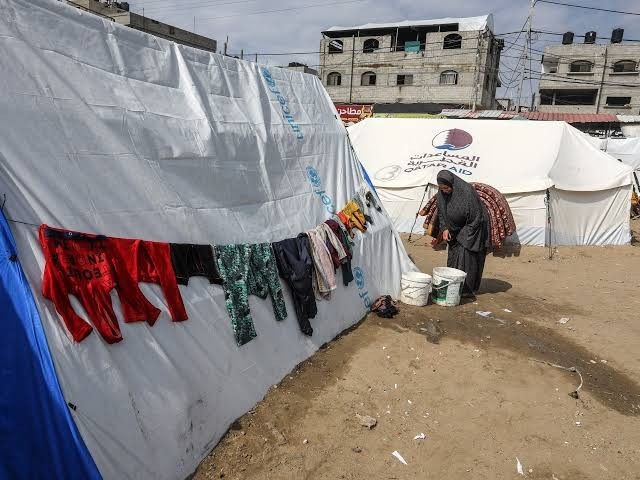
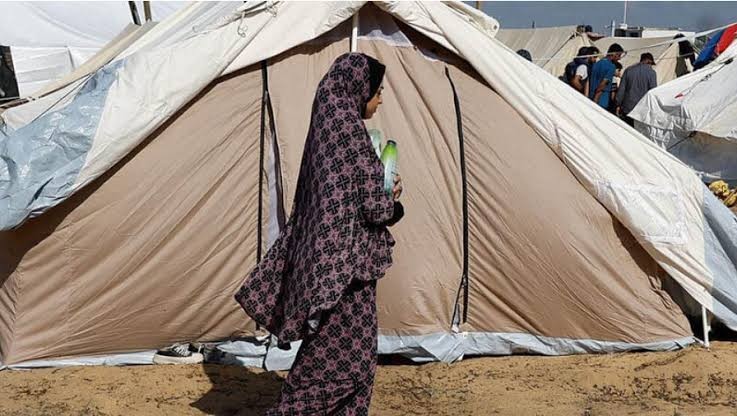
Displaced from Gaza City, she was living with 17 members of her family in a tent, where privacy was scarce, hygiene supplies were limited, and managing menstruation had become an additional burden for the women and girls in the household
“I took the pills and forced my young daughter to take them because sanitary pads were unavailable. I also suffered from fluid retention and pain in my legs,” she said
With sanitary pads difficult to obtain and privacy virtually nonexistent, Um Mohammad asked her unmarried 20-year-old daughter to use pills to delay or stop her period. Her sons' wives also used the pills, while Um Mohammad herself alternated between stopping and resuming them as displacement conditions changed, according to her account

She reported suffering from severe headaches, fluid retention, and leg pain. As with the other cases, these symptoms alone do not prove that the pills caused them, particularly in the absence of detailed clinical information about the products used, dosages, and pre-existing health conditions
Um Mohammad's experience reveals another dimension of the problem: when basic hygiene and privacy are absent, the consequences are not limited to women managing their own menstrual cycles. They can extend to family decisions involving unmarried young women as well
The testimonies do not mean that all women in Gaza have turned to birth control pills, or that every household has dealt with the problem in the same way. They document cases in which women changed the way they used hormonal medication in response to displacement conditions
From Family Planning to a Different Purpose
The testimonies collected by the investigation reveal overlapping reasons for using the pills, including the cost of sanitary pads, limited access to water and toilets, lack of privacy, fear of bleeding in crowded settings, and difficulties accessing medical care
“Alia” (a pseudonym), for example, used the pills for approximately six months without medical supervision. She obtained them from a pharmacy through a relative who worked there
After stopping the medication, she experienced pain, fatigue, and heavy bleeding. She later resumed taking the pills as displacement continued
“After stopping the pills, I suffered pain, exhaustion, and heavy bleeding. I then went back to using them because displacement was still ongoing,” she said
The available information does not establish that stopping the pills was the sole cause of these symptoms. Details about the type of medication and dosage were also unavailable
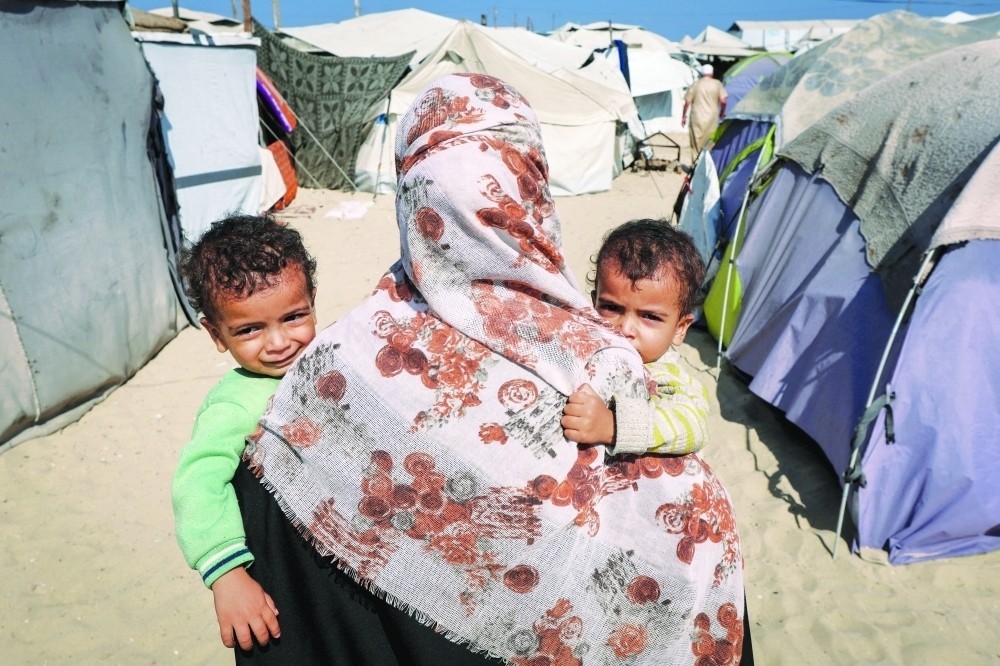
Another woman, “Rawda,” also a pseudonym, is 26 years old. She was displaced from the Sheikh Radwan neighborhood to Khan Younis in southern Gaza and used the pills for six or seven months, by her estimate, because of water shortages and the absence of privacy
She obtained them from government health centers or pharmacies when they were unavailable at the centers
Rawda reported persistent headaches and pain in her back, legs, and hands, although no medical diagnosis was available to establish the causes of these symptoms
“I used the pills because of the lack of water and privacy. I suffered from persistent headaches and pain in my back and legs,” she said
Experiences also differed according to marital status. One woman said that unmarried girls in her social circle had not used the pills, and that the users she knew were married. A pharmacist, who requested anonymity, said that some unmarried women had also requested them for this purpose
These differing accounts make it impossible to identify a single pattern among all women and girls. They instead highlight how motives and circumstances vary from one case to another
In another case, a woman resorted to the pills after experiencing bleeding that lasted for two months. She then had to travel a long distance to reach a medical point, where the medication was prescribed. When her supply ran out and she delayed taking the pills, the bleeding returned, according to her account
A Limited Survey
To move beyond individual testimonies and obtain a broader indication of the practice, the two reporters distributed an online questionnaire through WhatsApp and Messenger to 250 women. A total of 98 responded, representing a response rate of 39.2%
Of those respondents, 97 answered a question about whether they had used birth control pills to delay or stop menstruation during the war
Thirty-nine women said they had used the pills for this purpose, representing 40.2% of those who answered the question. Among these users, 26 women, or 66.7%, said they had continued taking them for six months or longer
The responses revealed several overlapping reasons for using the medication
Lack of privacy and shared toilet facilities: 28 out of 39 women (71.8%) cited the absence of privacy or difficulties using shared toilets
Fear of pregnancy and limited healthcare access: 25 women (64.1%) cited fear of pregnancy or difficulties accessing healthcare
Water shortages and the cost of hygiene products: 24 women (61.5%) mentioned shortages of water and hygiene supplies, as well as the rising prices of sanitary pads
Regarding access to the pills, 16 respondents said they obtained them from field medical points, 11 from pharmacies without a prescription, and seven from UNRWA clinics. Others cited relatives or government clinics as their sources
Nineteen respondents said they had been unable to reach a doctor after experiencing symptoms. Fifteen women said they were still taking the pills when they completed the questionnaire
Reported symptoms included
Headaches and pain in the back and legs: 19 women
Fluid retention or changes in weight and mood: 10 women
Fatigue: nine women
After stopping the pills, 18 respondents reported pain, fatigue, or heavy bleeding
These figures reflect the respondents' accounts. They are not medical diagnoses and do not establish that the medication caused the reported symptoms
Furthermore, because the survey was conducted online and was not based on a random sample, it cannot be considered representative of women across Gaza. The 40.2% figure must therefore not be used to estimate the prevalence of this practice throughout the Strip
Nevertheless, the findings offer an indication worth examining: among the women who participated, pill use was not always a short-term experience. In several cases, it continued for months, while some respondents reported difficulties accessing medical assessment when symptoms appeared
One mother of two teenage girls described the direct financial pressures behind her decision
“I took the pills to save money so I could buy enough sanitary pads for my two daughters”
The respondent said that a packet of sanitary pads cost 35 shekels, and that she used the pills to reduce expenses and ensure she could afford enough supplies for her daughters
Another unmarried participant living in a tent said that having to walk past men to reach the toilet and wait in long queues was enough to make her delay her period until circumstances changed
“Having to walk past men and wait in long toilet queues at the displacement camp pushed me to delay my period,” she said
In these accounts, the use of birth control pills does not appear as a medical decision made independently of surrounding circumstances. Rather, it emerges as a response to pressures ranging from the absence of privacy and the cost of menstrual products to difficulties accessing healthcare
A Crisis That Goes Beyond Sanitary Pads
These experiences cannot be understood without considering the scale of menstrual health needs in Gaza
According to the Menstrual Hygiene Management Response Plan for the Gaza Strip, issued in June 2024 by the United Nations Population Fund (UNFPA) and the Gender-Based Violence Area of Responsibility Working Group, approximately 691,300 women and girls of reproductive age were estimated to be menstruating in Gaza
The plan estimated that they required approximately 10,369,500 sanitary pads every month, based on a standard of 15 pads per woman or girl per month
The need, however, extends beyond the provision of sanitary pads. The plan highlighted shortages of menstrual hygiene supplies, difficulties purchasing them from the remaining markets, and limited access to clean water, functioning toilets, washing facilities, and safe waste disposal
It stressed that safe and dignified menstrual management requires appropriate materials, water and soap, and a clean, private place to change menstrual products
UNFPA also addressed the issue in a report published on June 2, 2025, linking the blockade imposed in March of that year to the depletion of hygiene supplies, including sanitary pads. The organization noted that damage to water and sanitation infrastructure, combined with water shortages, had made menstrual management increasingly difficult for women and girls in Gaza
This background does not prove that the shortage of sanitary pads led to widespread use of birth control pills. It does, however, place the women's testimonies within a documented humanitarian context
The issue is not about choosing one menstrual management method over another under normal circumstances. It is about trying to manage a recurring biological need amid shortages of basic supplies, water, and safe facilities
What Do Medical Guidelines Say About Birth Control Pills
Birth control pills are not all the same. The World Health Organization (WHO) distinguishes between combined oral contraceptives, which contain estrogen and progestin, and progestin-only pills. Their medical suitability varies according to each woman's health condition
The WHO notes that some users may experience changes in bleeding patterns or the absence of menstruation, as well as headaches, dizziness, nausea, and mood changes
Some rare risks, including blood clots, stroke, and heart attack, are associated with certain types of pills and individual risk factors. These complications should not be assumed simply because a woman uses birth control pills
Medical assessment is particularly important for women with high blood pressure or other risk factors. Combined pills containing estrogen require different considerations depending on the severity of the condition, while progestin-only pills do not carry the same estrogen-related risks
It is therefore inaccurate to treat all birth control pills as equally risky or equally suitable for every woman
“Yusra,” 37, said she used combined birth control pills for the first time to delay her period while living in a tent, without consulting a doctor, despite having high blood pressure
After using the pills for some time, she experienced severe heart palpitations. Her husband took her to hospital, where she said a doctor told her that her blood pressure had risen sharply and linked the episode to her use of the pills
“I experienced severe palpitations, and my husband took me to hospital,” she said
However, the investigation did not obtain detailed medical records, blood pressure readings, or written medical assessments. It is therefore not possible to establish that the pills were the sole cause of the palpitations or elevated blood pressure, nor to confirm claims that her life had been at risk of a stroke or heart attack without medical documentation
Her account remains a testimony of hormonal medication being used without prior medical assessment by a woman with an underlying condition requiring particular attention
In an interview with the reporters, Dr. Eyad Al-Attar, an obstetrician and gynecologist at Al-Quds International Hospital, said he had observed menstrual irregularities, weight gain, and fluid retention among women who had used birth control pills for extended periods without medical consultation or follow-up
He also described cases of bleeding that required medical intervention and tissue sampling for examination. He emphasized the importance of reviewing a woman's medical history, particularly high blood pressure, before selecting a contraceptive method
“I have observed menstrual irregularities and bleeding among women using the pills without medical supervision,” Al-Attar said
The doctor also discussed cases of delayed pregnancy following the war and women diagnosed with polycystic ovaries or experiencing other physical changes
However, these clinical observations do not establish that birth control pills caused polycystic ovary syndrome or infertility. Delayed pregnancy can result from multiple factors
The World Health Organization confirms that fertility returns quickly after stopping oral contraceptive pills and that their use does not cause infertility
Al-Attar estimated that approximately 30% of the cases he had dealt with involved problems associated with contraceptive use. However, he did not provide the total number of cases or the methodology used to calculate this percentage
Consequently, this estimate cannot be treated as a prevalence rate among women in Gaza or among women who used the pills specifically to delay menstruation
These findings underline the need to distinguish between three different things: symptoms reported by women, clinical observations made by a doctor, and a causal relationship established through medical evidence. They cannot be combined into a single conclusion that prolonged pill use caused all the reported health problems
When Psychological Distress Intersects with Medication Use
Alongside physical symptoms, some women reported mood changes and fatigue
Ruba, 40, said she experienced severe depression after three months of using birth control pills to stop menstruation during a period when sanitary pads were unavailable
“I took the pills to stop my period because of the conditions of displacement. Afterward, I suffered from severe depression, and I am still dealing with its effects,” she said
The available information does not establish that the pills caused her depression, nor does it allow the possible effects of the medication to be separated from the psychological impact of war, displacement, and traumatic experiences
Hiyam Khalafallah, a psychologist working with the Palestine Red Crescent Society (PRCS), explained that prolonged stress associated with war and displacement can affect sleep, emotional regulation, and a person's ability to cope with pressure
She noted that psychological responses vary from one woman to another
“Some women using hormonal medication may notice changes in their mood. However, determining the causes of psychological symptoms requires individual assessment. They should not automatically be attributed to the pills alone,” she said
Khalafallah added that understanding these experiences within their broader context helps women seek support without blaming themselves or viewing their suffering as a personal weakness
In such cases, psychological experiences cannot be reduced to a single factor. A woman living in a tent without privacy or adequate water, while facing daily concerns about food, safety, and her children, may experience significant psychological distress regardless of whether she is taking medication
Any assessment of her symptoms must therefore consider the full range of her health and social circumstances
Who Dispenses the Pills, and What Do Institutions Record
In testimonies collected from pharmacists, Mohammed Shaqoura, a pharmacy owner in Beach Camp, said he had seen both married and unmarried women purchasing birth control pills to prevent pregnancy or delay menstruation without prescriptions
Pharmacist Lama Yassin also described requests from some unmarried women for progestin-containing pills for this purpose
Meanwhile, pharmacist Khaled Zaqout said demand for these pills appeared to have increased compared with the period before the war, adding that some women and girls obtained them without medical consultation
“I have seen married and unmarried women buying these pills without prescriptions,” Shaqoura said
These accounts represent the professional experiences of individual pharmacists and do not constitute a comprehensive record of medication sales across Gaza. The investigation did not obtain independent quantitative data that could measure changes in demand or determine the number of users
Legally, Article 66 of Palestinian Public Health Law No. 20 of 2004 prohibits dispensing medicines that require a prescription without one issued by a physician. The law leaves the classification of such medicines to the relevant regulations
However, this provision alone cannot establish that every type of birth control pill requires a prescription, or that every sale described in the testimonies constituted a legal violation. Determining whether a specific sale was unlawful requires verification of the classification of the particular medication and the regulations applicable to it
In response to the investigation's questions, Dr. Khuloud Hamad, the Ministry of Health's official responsible for maternal and child health and supervisor of the scientific committee of its reproductive health program in Gaza, said that contraceptive pills are dispensed through family planning services at primary healthcare centers to married women following an assessment of their medical suitability
She added that the program does not dispense the pills for the purpose of delaying or stopping menstruation
“Our family planning program does not dispense pills to delay or stop menstruation,” Hamad said
She explained that family planning records do not classify medication use according to its specific purpose. As a result, the ministry does not have official data specifically documenting this practice or its complications
In its response, Samih Abu Habal, deputy head of the Pharmacists' Syndicate in Gaza, said the syndicate had no studies measuring demand for the pills during the war
“The syndicate does not have studies on the scale of demand for these pills during the war. This requires a study involving both women and pharmacists,” he said
He added that international organizations had provided some medications at certain centers, but he did not have accurate figures on the quantities or number of beneficiaries. He also pointed to lists maintained by the General Directorate of Pharmacy regarding medicines entering Gaza and shortages
Meanwhile, Melina Shaheen, UNRWA's regional media director in Gaza, said the agency did not have the requested data on the quantities of birth control pills provided or dispensed during the war. She referred the inquiry to UNFPA
“We do not have data on the quantities of pills that were provided or dispensed,” Shaheen said
According to the response received by the reporters, UNFPA also confirmed that it did not have specific data on the use of hormones to delay or stop menstruation in Gaza
The organization explained that family planning information systems do not necessarily track medicines women obtain from pharmacies or other sources, nor do they record the purpose for which the medication is used
“We do not have specific data on the use of hormones to delay or stop menstruation,” UNFPA said
The organization also said its programs had not received specific reports documenting unsupervised hormonal use for menstrual suppression or complications associated with it
However, the absence of reports does not mean that cases do not exist. Similarly, the lack of dedicated data does not, by itself, prove deliberate institutional neglect
What can be concluded from the responses is that the institutions contacted by the reporters were unable to provide data that would establish the scale of this practice or measure its health consequences across the Gaza Strip
The Monitoring Gap: What Remains Unknown?
The testimonies, survey responses, and pharmacists' accounts reveal overlapping indications that some women have used birth control pills to delay or stop menstruation under displacement conditions
Yet fundamental questions remain unanswered
How many women used the pills for this purpose? Which types did they take? How long did they continue using them? How many received medical assessments? Which reported symptoms were clinically diagnosed, and which could be attributed to the medication or other factors?
The non-random survey cannot provide representative answers to these questions. The responses received from health authorities also contained no dedicated data that could resolve them
Even if medication dispensing records were available, they might reveal the types and quantities of medicines distributed, but would not necessarily establish whether women used them for contraception or to delay menstruation
This is the monitoring gap highlighted by the investigation: individual testimonies and a limited survey document cases of use under humanitarian conditions that pushed some women to seek ways of avoiding the difficulties associated with menstruation, yet there is insufficient data to measure the scale of the practice or assess its health consequences across Gaza
This does not mean that birth control pills are inherently dangerous, nor that using them to delay menstruation inevitably leads to complications. Medical decisions depend on the type of medication and each woman's health condition, and medical guidelines emphasize the need for individual assessment
But when women obtain these pills and use them for months without consultation, while facing difficulties reaching doctors when symptoms emerge, it becomes increasingly urgent to understand what they have taken, how they have used it, and how their health has been affected
At the same time, women should not be held responsible for choices made under circumstances in which suitable alternatives were unavailable
Menstrual health management requires more than a packet of sanitary pads. It requires clean water, soap, safe toilets, private spaces, regular supplies, reliable health information, and access to healthcare providers
For Maysaa, the story began with an episode of bleeding in a tent in front of her extended family
For Um Mohammad, the problem extended beyond managing her own period to a decision she asked her daughter to make as well
Between these two experiences, the cases documented by the investigation show how a normal bodily function can become, under the pressures of displacement, poverty, and the absence of privacy, a reason for some women to take hormonal medication without sufficient knowledge of